
Introduction
Data observability is a critical aspect of managing and understanding complex data environments. It involves the ability to monitor, detect, and resolve data-related issues quickly and efficiently. This summary encapsulates the key points from an article that delves into the nuances and importance of data observability.
What is Data Observability?
Data observability is defined as the practice of understanding the health and state of data systems by continuously monitoring, tracking, and analyzing data anomalies. It helps organizations maintain data quality, reliability, and security by providing insights into the systems’ operational aspects.
Importance of Data Observability
The importance of data observability cannot be overstated. It ensures that data pipelines are running smoothly and efficiently, which is crucial for businesses that rely on real-time data for decision-making. With robust data observability, companies can prevent and swiftly address issues such as data downtime, data loss, and inconsistencies.
Key Components of Data Observability
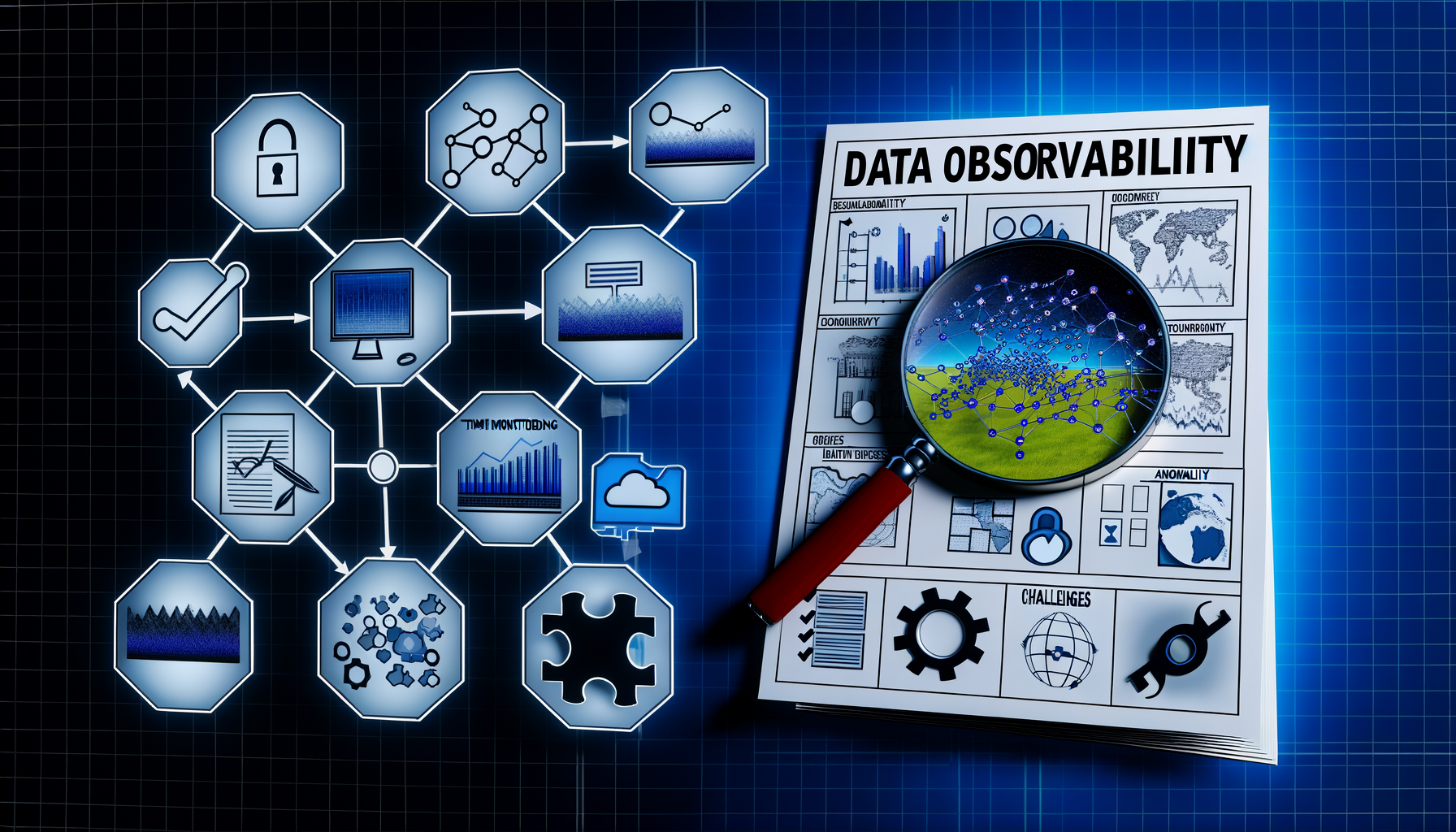
The article outlines several key components of data observability. These include data monitoring, data lineage, data health checks, and anomaly detection. Each component plays a specific role in ensuring overall data quality and reliability.
Data Monitoring
Data monitoring involves continuously tracking data flows and system performance. It provides real-time alerts and metrics that help in identifying and rectifying issues as soon as they arise.
Data Lineage
Data lineage refers to the tracking of data’s origin, movement, and transformations. This component is crucial for understanding the data lifecycle and for auditing purposes.
Data Health Checks
Regular health checks are essential for maintaining data quality. These checks evaluate various data attributes such as completeness, accuracy, and timeliness to ensure that data meets predefined standards.
Anomaly Detection
Anomaly detection is the process of identifying unusual patterns or behaviors in data. It is integral for preemptively spotting and mitigating potential data issues.
Challenges in Implementing Data Observability
The article also touches upon the challenges that organizations face in implementing data observability. These challenges include the complexity of data environments, the volume of data, and the integration of various data sources and tools.
Conclusion
In summary, data observability is indispensable for maintaining the health and integrity of data systems. By incorporating comprehensive monitoring, lineage tracking, regular health checks, and anomaly detection, organizations can ensure high data quality and reliability. The insights from data observability not only aid in operational efficiency but also in strategic decision-making. The challenges in implementing data observability can be significant, but the benefits far outweigh the difficulties, making it a crucial aspect of modern data management strategies.
View the original article here: https://boomi.com/blog/data-observability-explained/